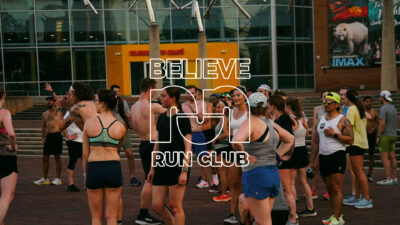
In February 2011, I ran my first Ragnar. I was part of a 12-man team that ran from Wickenburg to Tempe, Arizona. We had a great time and as soon as we got home a few members of the AZ team decided we would like to try the Ragnar experience as an Ultra team. An ultra team runs double the miles.
"Ragnar is the overnight running relay race that makes testing your limits a team sport. A team is made up of 6-12 individuals; each individual runs 3 legs. The legs of the race vary in difficulty and distance, from 3-8 miles, allowing elite and novice runners to run together. Over 2 days and 1 night, teams run across 200 miles of the country’s most scenic terrain. Pair that with crazy costumes, inside jokes, a great finish line party and unforgettable stories. Some call it a slumber party without sleep, pillows or deodorant. We call it Ragnar." -From the Ragnar Relay website
One reason we wanted to do the 6 man ultra team was the simple fact that you don't really see or bond with the other van during the relay. The alternate van is out running while your van is taking a break and vice versa. Secondly, we were all up for the bigger challenge of running double miles. Having run both the regular 12-man Ragnar Relay and the six man Ragnar, I can tell you they both have their advantages.
The 12-man team allows for runners of all talent levels. Even someone that has never run five miles before can participate in a Ragnar Relay. There are many of teams just out there for the pure joy of being part of the event and they are not worried about being competitive at all. Every shape and size person is well represented at the relay. The 12-man team can actually get some rest and or get food when the other team is out on the road. The 12-man Ragnar is a ton o' fun that will be a challenge for the average runner. I love to run and I like to feel like I have really conquered a challenge, for me the 12-man team offers the jocularity and merrymaking, but wasn't quite the challenge I was looking for. We ran it hard, but traveling half way across the country to run a little over 14 miles left me wanting more.
Running the six man ultra team provided the challenge we missed the first go around. My relay legs added up to 35 miles of running. Breaking up the runs might have been harder than just running 35 miles straight out. With all six of us in the one van, the bonding aspect was still part of the event but made for less time to rest and recover between runs. We didn't get a chance to stop for much because the team is supporting the runners while they are out on the road. We took a break to get some food and coffee at Starbuck's, when we arrived at the next check point to exchange runners, our runner had to sprint from the van to beat the current runner to the exchange. It was a close one. This made whole event go by really fast. Before I knew it we were in Key West at the finish.
The Ragnar Relay team puts on a spectacular event. I have run other relays and Ragnar does the best job. My only complaint is that the swag for ultra teams is non existent. Ultra teams get the same shirt and medals as the 12 man team. To add insult the medals and the shirt read "2x Van 12x Runner…" There were at least 30 Ultra teams that's 180 people at just this one event. I would have liked a special shirt and medal for the ultra.
Finally, between Florida Keys and Arizona, I liked Arizona's run slightly better. I really enjoyed the desert runs and there was a lot less traffic than when we were going through Miami. However, the straight flat running on route 1 and the water views on the way to Key West were awesome. I highly recommend running a Ragnar Relay; it is a barrel of monkeys with some running mixed in.
Contest: Women post a comment and your shoe size for your chance to get a pair of Merrell Pace Gloves from Believe in the Run.
There was a time when I heard the brand Merrell, and would think hiking boots. Period. What a flawed conception of the company! If you take a look at their site, you'll find that they offer all KINDS of goodies. I had the pleasure of trying out their Pace Glove Trail Shoe. I consider myself somewhat of a minimal runner, wearing a neutral shoe and staying in as light of a trainer as I can but the Pace Glove took it to a whole 'nuthuh level. These bad boys weigh in at only 4.7 oz. All this time I thought my Saucony Kinvaras were lightweight at 6.5 oz! As far as Aesthetics, they're PURDY. It's like the colors were handpicked and custom made to match my fave Lululemon shorts!
They have an incredibly snug and secure fit, leaving plenty of room in the toe box. Normally I wear a size 8 running shoe but for some reason the arch hit funny in that size, so I sized down and sockless, the 7.5 seems to fit just right. Before taking them out for a run, I spent a day walking around, trying to get a feel for the Vibram sole. It's a really comfortable casual shoe and has quickly become my new "gym shoe". Besides figuring out that "crystal" is a delicious shade of turquoise, these shoes are structurally sound. The stitching is clean, upper mesh flexible, soft elastic heel and the sole protective enough for the trails.
My calves weren't quite up for consecutive big miles in the Pace Glove and for the sake of review, I tried them on a treadmill, too, (blech) but for short trail distances, I was happy with their performance. I don't think I could handle a really technical trail in them, only because there isn't a huge amount of traction and virtually no cushion. There is plenty for differing surfaces, though: grass, sand, moderate amount of rocks/roots but I need more to a sole when dealing with the BIG DAWGS. In short, I need to acclimate my feet/calves for "barefoot" running but give the Pace Glove high marks.
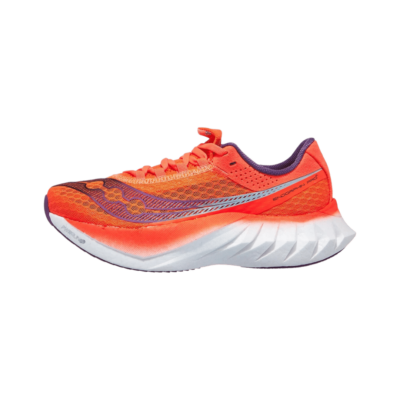
I can't tell you how I got these sweet pics of the women's Saucony Kinvara 3, but I can tell you I like the way they look. This go around the uber popular Kinvaras get a more of a substantial makeover than the Kinvara 2s did. This color combo is SLICK too. I hope they run as good as they look. People will be tough on them if they don't like the update. Fingers crossed for you Saucony. Kinvaras are one of my favorites and the shoes that carried me over the finishing line on my marathon PR. Viva Kinvara.
Ever since I saw my buddy Steve Speirs AKA "The Britishbulldog" running around in his bright red Inov8 X-Talon 190s, I have wanted to try out Inov8's shoes. They look super aggressive with their low profile and incisor like lugs. I have another friend that raves about his Road X-Lite 155s. You can guess I was pretty stoked when I found out that Inov8 would be sending both Jenny J. and me a pair of Inov8s to try out and review.
My first impression when I grabbed the shoes out of the box was that they didn't look as much like running shoes as they did like hiking shoes. The 295 are much more chunky looking than the X-Talon 190. The look of the shoe led me to believe that they would be heavy, at 10.4 oz the shoe feels pretty light on the feet. Take a look at the tread, that is a ton of rubber for 10.4 oz. I ran a little over 20 miles of trail in the RocLITE 295. The highlight is most definitely the super trail gripping lugs on these bad boys. While I was happy with the overall performance of these shoes, they just didn't fit me right. I have slightly narrow feet, and had to crank down the laces to get a snug fit. Even after cinching up the shoes tight, I still had too much play in the toe box. I did something I have never done before. I asked my friend Stein L. (Stein reviewed the New Balance 890) to take some runs in the shoe and give me his opinion. I wanted to be fair in the review, perhaps the shoe just didn't fit my foot well. So Stein helped me out.
Stein's take:
The shoes were comfortable, with ample room in the toe box. My heels stayed where they should. For ascending they were awesome – the lugs on the bottom grabbed everything. My running buddy that day had on road shoes and he was slipping a lot. Unfortunately descending wasn't as great because my toes kept banging into the front of the toe box - and – I'm concerned that if I got a bigger size the "ample" room would become "too much" room in the toe box (already had to lace it fairly tight). I had no hot-spots or blisters after a 13 mile trail run. I thought they were great shoes, awesome traction and just the right amount of cushion. I do agree with Thomas that they run on the wide side.
Jenny J's review:
The more trails I run, the more trails I want to run and finding that perfect trail shoe is my quest. I've tried a few different brands in the past but have found nothing that I love and go to instinctively. Inov8 was kind enough to send a pair of their RocLITE 268 women's trail shoes for review. They're not the easiest shoe to find in the U.S. (yet) and most of their shoes are unisex sizing, so I was excited to try one that was customized for a woman's foot. There is a huge selection and the smaller the number, the lighter the shoe.
My initial impression of the shoe was that it looked bulky. It looks like a hiking shoe, and not something I'd run in. When I pulled one out of the box, however, it was surprisingly light for how much sole there is to it. Not only was it light but it was PRETTTTY…I love me some turquoise and when I saw the lace eyelets sewn on with heavy duty ribbon-like material, I gasped a little. They make me smile.
The trails I frequent are a mix of surfaces ranging from asphalt, grass, sand, rocks and roots, mud, stairs, a creek crossing and even snow/ice in the winter. I gave these shoes a run for their money. They have 40 miles split amongst three runs, all in varying conditions. The trail begins on the road and right away I noticed that this was just too much shoe for the asphalt. I was looking for patches of grass to escape to, just to lesson the blow on my foot. It wasn't painful but I felt like I was clomping along. There's not a whole lot of cushion, which works well for the trail but not the street. The next part of the trail is packed dirt which then leads to a flat sandy stretch. I felt like I had a lot of control over the rocks and roots…not so much the sand. I don't think it matters what shoe you're wearing on sand, though…it's gonna suck. Two of the runs were done after a big rain and the trail was sloppy. This was just the shoe for a messy course. The lugs gave a ton of traction and I was confident making my way up and down a technical switchback trail. I'd love to try something with just a little less bulk, though, without compromising the traction.
Even with 40 miles on them, there is no sign of wear, other than all the mud I brought home with me. Quality workmanship, solid materials, and a well thought out design put these shoes in a class of their own. There are a mix of fabrics which allow for the rugged terrain but also the breathability necessary when crossing creeks and dealing with the elements. Inov8 has paid close attention to detail and every time I look at the shoe, I see something new. Overall, this is a great shoe and the Inov8 brand is highly recommended. Start putting some pressure on your local retailers to start carrying the brand!
Best In Gear: Traditional Trainer goes to the Saucony ProGrid Triumph 9. Every mile in these shoes has been great. After more than 200 miles the shoe is holding up and has very little wear on the tread. I am somebody who can tear up a shoe, so I am really impressed with how they are holding up. They still feel as cushiony as they did the day I first tried them on. Original review
Best In Gear: Racing Flat goes to Newton's MV2. This is a fast shoe. The last two races I have had a serious cold and I still was seconds away from a PR in a 5k and PR'd a five miler (running in the 6s for both events.) The shoe is light, fast and feels great on the road. Original review
Best In Gear: Trail Shoe & Minimal Shoe goes to Merrell Trail Glove. I could have split this category up and named two shoes, this Merrell shoe covered both categories. The word that comes to mind with these shoes most is "fun." I just like running in these. Since my original review I have done some longer runs in the shoe including a 16 miler. If I can get my calves used to zero drop shoes, I would be willing to try these for my upcoming trail ultra. Original review
Best In Gear: Apparel goes to ashmei. This jacket is badass, just read my original review.
Best In Gear: New Running Product goes to Rüez Performance Underwear. At first I was a skeptic, then I wore them. There unique approach to keeping your male parts safe, secure, and happy truly works. I highly recommend trying a pair of these out. You will be saving them for your big runs along with your favorite socks. Original review
I can't wait to see all the 2012 gear. Enjoy those miles.
2011 California International Marathon Race Recap! 2:35:05 chip time; 66th place overall; 64th place male; 20th place 30-34.
The epic pre-race lead-in is already documented in Chris S.'s race recap, so I'll just focus on the race itself. Garmin Stats
The first 5k was typical for any marathon, namely jogging and finding rhythm, looking around me for people to work with. Chris and I stuck together until 2+ miles in, when he settled into his race pace and I did the same. The first 10k was mainly just an exercise in being relaxed and not expending any effort, so I was happy that my legs settled into a natural 5:5x pace.
I carried with me a flask of First Endurance EFS Liquid Shot (it was 3/4 full to start). I took my first swig around mile 4 or so. With my trusty Asics arm sleeves, I could stash the flask without expending any energy holding it in my hand. Around the 10k mark, I settled in with another guy and we started chatting a bit. As it turns out, he grew up in Vermont just like me. We stuck together for the next 5 miles or so.
Through the half, my only goal was to stay relaxed and even. As long as I was breathing evenly, I knew I was fine. The pace stayed in the same range. Somewhere before 12, the guy I was running with picked it up a bit. Although the racer in me debated just going along for the ride, I told myself to run my own race (he had mentioned wanting to run 2:30 "if he felt good"). I went through the halfway point in 1:17:34. By this point I had finished and tossed my flask of Liquid Shot.
Just after the halfway mark, I settled in with a small group of guys that would be near me until mile 22 or so. We all never spoke to one another, but we each took our turn setting the tempo. It had the feel of the unspoken organization of a professional cycling breakaway. The only annoying part was one guy had his Garmin set with pace zone alarms…so much annoying beeping.
Through mile 20, I just kept reminding myself to wait, wait, wait. No pressing until the last 10k. All along, our little pack of 4 or 5 guys was picking of plenty of people that expended too much energy in the first half. By the time we passed 20 miles, the other guys in my pack had also fallen back and I was alone again. I saw that I had gotten pretty close (I was counting 30-45 seconds) to the Vermont guy I had run with early, so I decided to just see if I could keep making ground on him. He had a bright blue shirt on that was an easy target. One final gel (Hammer Espresso) and it was time to get busy.
As expected, everything started to hurt in the last 10k. It was almost countdown time. Having driven the course the day before, I knew that once I crossed the H Street Bridge onto J Street, I only needed to run 49 blocks South to reach the turn at 8th Street. I called out each block out loud to keep myself motivated… 47 to go… 47 to go… 46… etc.
Over the last few miles, I also focused on catching and passing as many people as possible. I caught my fellow Vermonter with about 2 to go. He stuck on my hip for about 2 tenths, then said "Fuck," and faded. Each other person I caught motivated me all the more to keep pressing.
When it got down to 10 blocks until the turn, I was in full short-course race mode. Screw the pain, screw the exhaustion, just run hard. When I hit the 2nd to last turn, I saw a clock with 2:34:xx on it so I dug deeper. I did a combination of sprinting and celebrating in the final stretch and hit the line as the clock read 2:35:05. A goal nailed.
Here are some fun facts: The 13 people who finished in the places behind me all ran a faster split in the 1st half. The 15 people who finished in the places behind me all ran a faster split at 20 miles. But my splits were 1:17:34, 1:17:31… Even pacing or negative splits ALWAYS lead to faster marathon times.
Thanks to everyone who gave me so much support. Especially Lindsay M. I wouldn't be accomplishing anything without her support.
I am not a newbie when it comes to Newton Running shoes. When all the other manufactures were offering standard trainers at a weight of 11+ oz. and up, a new company (Newton) out of Colorado was offering a light weight (9.4 oz.) training shoe with a new technology that encouraged mid-foot striking. As a natural mid-foot striker I was intrigued by the shoe. The look of the Newton Gravity trainer was also unusual at the time. Most of the mainstream running companies were making boring looking shoes. The shelves at your local running retailer were filled with white trainers with some color accents. Newton trainers were decked out in bright colors that looked fast. The other big difference between Newtons and other running shoe brands was the price point. The Newton trainers were and are expensive. No retailers near me carried the Newtons back in 2008/09, if I wanted to try them I would have to bite the bullet and order a pair direct from Newton. Back in 2009, I purchased a pair of Newton Gravity trainers at a cost of $175 + shipping and handling. The most I have ever spent on running shoes to this day. The Newton Gravity trainer was my favorite shoe for quite awhile. I still have my first pair and occasionally pull them out for a run even though they have well over 500 miles on them. There has been an explosion of light weight lower heel drop shoes on the market in the past two years. Colors are also being used more liberally. There are a lot more choices for mid-foot strikers that want a light trainer, Newton remains in my top three choices when I look for a trainer.
I was sent a pair of the MV2 to review for the Believe in the Run site. When I pulled the super light shoe (5.8 oz. for size 9) from the box, I had mixed feelings towards the shoe. The finishing details of the upper seemed less refined than that of some of Newton's competitors. When I first tried the shoe on, I saw that there was extra material left around the tongue of the shoe. When I first started running in the shoe the extra material was noticeable. After a couple runs the upper settled in and I have no complaints about the feel. I have completed runs wearing various thicknesses in socks and the upper is snug and comfortable with no irritation from the tongue. The color combo for the shoe is not my favorite color pallet Newton has put together. Ronald McDonald comes to mind, but hey your not buying a prom dress your buying a running shoe. What makes the Newton special is not the upper or the color scheme, it is the way the runner connects with the road. The MV2 are a great addition to the Newton line up when it comes to sole of the shoe and the actuator lugs.
The lugs act as a reward when you achieve the proper foot strike by giving the runner a bit of spring action as they expand on take off. I like to feel the lugs as I run and find that the ability to target the right stride using the lugs is helpful in achieving an efficient stride. This may be a sensation that doesn't work for everyone. Throughout the run the feel of the lugs is present. The more miles I put in the MV2, the more streamlined my stride got. A faster cadence came naturally in these shoes without much effort.
In the MV2 my runs were fast. I wanted to wait to review the shoe until I had the opportunity to race in them. This past Sunday I ran a Jingle Bell 5k in the MV2 and was able to put them to the test. Even though I was sick on the race day, I was able to put in a decent effort. I concentrated on the foot strike and leaning my hips forward. This was a hilly course and I finished in the top 20 out of 877 runners. How can you not love a shoe that helps you perform well? The footwear felt great the entire run, light and fast. I am looking forward to wearing the MV2 in next week's 5 mile Celtic Solstice run. When a shoe gives you confidence at the starting line, it is one less thing to worry about. How much is that worth? This is a minimal shoe and I have not figured out what the max distance I would race in this shoe is yet. I lean towards maxing out at a half marathon, but if they felt good during a half I would give them a go for bigger mileage races.
The MV2 in a size 9 weighs in at just 5.8 oz. My foot has spread a little, I opted to go up to size 10.5 vs my regular 10. The shoe fits perfect with the additional half size up. The shoe comes with an optional 3mm pad that has adhesive that can be placed in the heel of the shoe for those that may not want a zero heel to toe drop ratio. I used the 3mm pad. Originally I was going to take it out after a few runs, but ended up leaving it in. The shoe felt good and I did not want to mess with it. For more stats and information including videos on Newton Running's MV2 visit the Newton site.
One last note. In the past I have had issues with calf pain in more minimally pitched shoes. While creating the video below with Newton Educator, Juda McGannon, Juda noticed I wasn't settling my heel during my stride. Basically, I have been running on my toes. After focusing on landing on the mid foot then letting the heel make contact through the stride, the calf issues have all but disappeared. Even if you don't buy a pair of Newton's it may be worth while to take part in one of the clinics the Newton reps put on at your local running store. Just a slight tweak in your stride might save you from an injury. Juda talks about Newton's Technology and gives some tips for running the Newton running shoes in the video below.
I'll start with the compression top. My first thought was, "Wow, this fits really nicely!". I wore it for a 10 mile treadmill run and don't remember having any issues with it. It was snug but not too tight, yet still breathable. Upon the second wear, I was running a 30k trail race and I noticed that it rode up on my midriff–ended up with a bunch of belly race photos! I *think* that may have been due to the bib number pinned to the front and need to wear it another couple times to make sure.
During the race, I also wore the compression calf sleeves. Now, I would consider myself petite and didn't realize I had thunder calves until I measured them and referenced Tommie Copper's size chart. According to their site, I needed a Medium. They definitely give an element of compression but I'm wondering if a Small would've been more therapeutic. My only concern sizing down would be that the top band be too constricting. I've worn them several times since for recovery and they are very comfortable.
I seem to be plagued with cold hands all.winter.long. The full finger gloves were very lightweight, giving just a slight barrier between the elements and not quite snug enough to be compression. They're more of a base layer and/or mild weather glove than fall/winter.
Their gear is nice–quality products that I could easily recommend. I'm not necessarily convinced of the therapeutic properties of copper stranding BUT, I will say that compression has been a huge part of my recovery. After a particularly intense run or big miles, I always pop on some calf sleeves. I don't know if it's scientific or in my head but my recoveries always seem much quicker when I've remembered to gear up post run.
Thomas' Review
I use compression sleeves when running. There is a lot of debate on whether or not compression gear is beneficial while running. I have had to trust my own feelings. My legs feel better when I use compression calf sleeves on long runs. Almost everyone agrees that the proper amount of compression aids muscle recovery after the run. However you feel about it, it will only help if the sleeve stays in place over the intended muscle group. I have had socks and sleeves that have needed constant adjusting to keep in the desired location on my calves. My favorite feature in the Tommie Copper sleeves is the thin beading of tacky rubber on the inside of the elastic. The rubber kept the sleeves in the right spot.
The difference between Tommie Copper's compression gear and other manufacturer's compression products, is the use of copper in the fibers. Tommie Copper calls it "Therapeutic Copper Compression." Medical studies support the positive affects of copper as a beneficial mineral. We get most of what we need from our diets. There is little information out there about wearing copper, most articles are about wearing bracelets. Copper surfaces are being used in hospitals to limit bacteria growth. If the copper in the sleeves doesn't help with improved blood flow at least it will inhibit bacteria growth. It might have been a placebo effect, however, my legs felt pretty darn good when I had the sleeves on. Hmmm, maybe copper can work magic.
I also used the knee sleeves and the shirt. The shirt is a snug fit, nothing stood out from other compression shirts I have worn. The copper may help with odor.
After the last marathon my knees were a little achy and I was happy to try out the knee sleeves. I wore them during runs with good results. I am not used to having anything on my knees and was very aware of the elastic cuffs. They were not uncomfortable, but I could feel them.
Overall, the Tommie Copper products are good quality compression gear. With the added benefit of the copper fibers how can you go wrong?
Tommie Copper provided both reviewers with product to review.
Let's start by defining a "pirate runner." There are two kinds of pirates. The first is a runner that runs in a race that they did not pay to enter and doesn't have a bib. A straight up scallywag! The second, slightly less devious, pirate is the individual that obtains a bib and runs in another runners place. This second pirate is the one the running world can make peace with by changing how runners exchange bibs.
The current system doesn't work. People transfer bibs, it happens. We all know it happens. Instead of making it a crime, we could come up with the new way in which to do it above boards. Why does this have to be a battle between race directors and runners? People are not buying up bibs and scalping them. Usually, the reason for someone to give up a bib is life gets in the way, they didn't train properly for the event, or they got injured. So they ask their friends if anyone would like to run under their bib. My thought is… Why not make it legal to transfer your bib? The race directors could even charge a transfer fee. I am sure the team over at active.com could whip together a way to transfer bibs.
I believe we can end running piracy. Race directors let's figure out a better system for transferring bibs. This could create happy runners and happy race directors.
If you have any thoughts or comments on how bib tranfers could work, please enter your ideas below.
Here in Baltimore, it doesn't snow all that much (other than a bad winter every few years), but we get a lot of that wintry mix stuff, which is even more difficult to run on than pure snow. I despise the treadmill, so I had been looking for something to allow me to run those 8-15 days a year where the ice on the roads and sidewalks is just too challenging and dangerous. When it snows a lot, I have to get on the 'mill, but I try and limit those days as much as possible. Unless I actually have to wade through the snow, I want to run outside. In any event, about 2 years ago, I stumbled upon Icespikes. Strangely, none of the local running stores carried them, even though a number of people on the web raved about them. You always hear of people just pushing screws into their shoes (which is a similar proposition), but that made me kind of nervous, so I never tried it.
Got the icespikes in the mail (they're now $24.99 a package) and took out an older pair of running shoes (you don't have any of those lying around, do you?). The directions were very easy to follow, and they even gave you a tool with which to push the "spikes" – basically little screws with more "bumpy" heads — into the shoe. They give you a picture of a shoe and where the "spikes" are to be placed. You take a magic marker and mark the bottom of your shoes, and then just push them in. Simple as that. Believe me, if anyone would need help with this, it would be me. But I did it all by myself. No need for reinforcements! A miracle, I tell you.
The first thing to know is that these are not made for walking around your wood floor. May seem obvious to some. . . and in all honesty, they're a little awkward on a bare sidewalk or street. But once you get out on some packed snow or ice, they are golden. They just make you feel so much more secure out there. That's not to say that you don't need to be careful, but it really is like night and day. I probably used them 7-8 times last year, and did not fall once. I even started wearing the spiked running shoes just to shovel snow. They're not impossible to wear on bare sidewalk/road, but they feel a bit awkward. That said, I've definitely worn them on runs where there's a mix of icy/snowy surface and bare road, and other than feeling strange – and being noisy – it was fine.
My "ice spiked" shoes sit on the bottom of my coat closet waiting for that first icy/snowy run. They allow me the comfort not to dread those days – in fact, I kind of look forward to them a bit – no one else is out there on those days, and well, they kind of make me seem like a badass runner.